Hiring a licensed electrician los angeles property owners can dispatch directly resolves sudden breaker trips, ungrounded branch circuits, and outdated main service equipment without broker middlemen. Standard dispatch diagnostics begin at a $150 minimum diagnostic fee to evaluate system integrity on-site across Los Angeles County.

An electrician in Los Angeles is a state-certified trade specialist who installs, troubleshoots, repairs, and inspects residential and commercial power systems under Title 24 energy standards and the Los Angeles Department of Building and Safety electrical code.
Every service reflects the same meticulous attention to detail, whether it's a single job or a larger electrician project across los angeles.
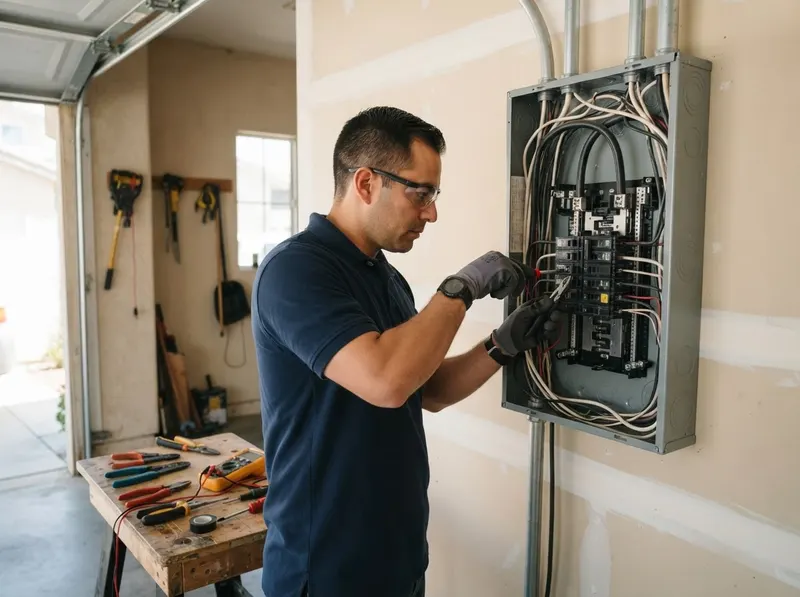
Upgrading vintage 60-amp and 100-amp panels to modern 200-amp or 400-amp enclosures prevents main-lug thermal failures and expands capacity for modern heat pumps, solar integrations, and energy storage systems. Service involves decommissioning obsolete split-bus, Zinsco, or Federal Pacific Stab-Lok panels, driving dual copper ground rods 8 feet into earth, installing whole-home surge suppression devices, and coordinating LADBS inspection with LADWP meter unlock and reconnection procedures. Technicians calculate branch circuit ampacity under NEC Article 220, replace aged service entrance conductors, and configure clean, labeled bus bars that eliminate hazardous tandem-breaker crowding in dense residential load centers.
Get a quote →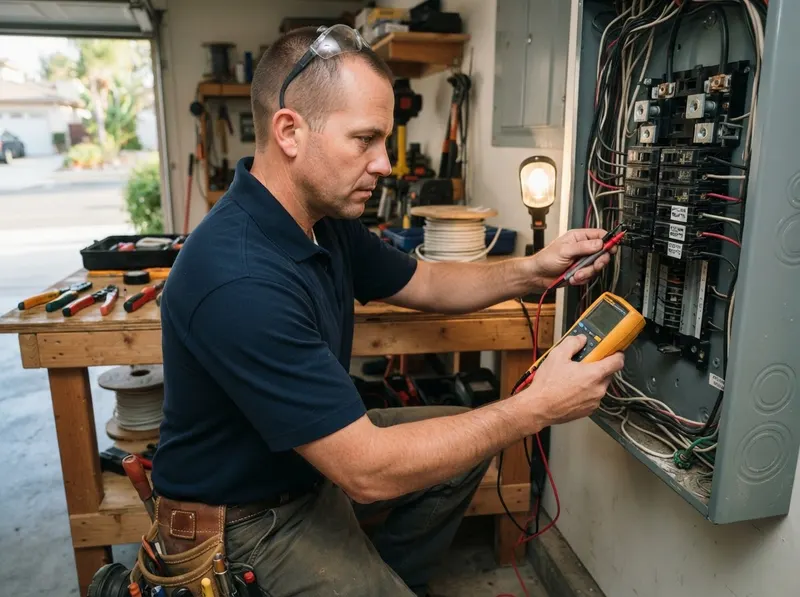
Pinpointing sudden total power loss, buzzing branch breakers, or intermittent voltage drops across individual circuits using digital multimeters, megohmmeters, and thermal imaging cameras. Diagnostic work systematically isolates line-to-line faults, neutral dropouts, loose wire nuts, and deteriorated splices tucked inside junction boxes, restoring active power safely under a structured diagnostic process starting at $150. Technicians test breaker spring tension, verify correct line voltage under load, inspect conductors for heat-degraded insulation, and resolve recurring nuisance trips triggered by hidden ground faults in residential walls and commercial ceilings.
Get a quote →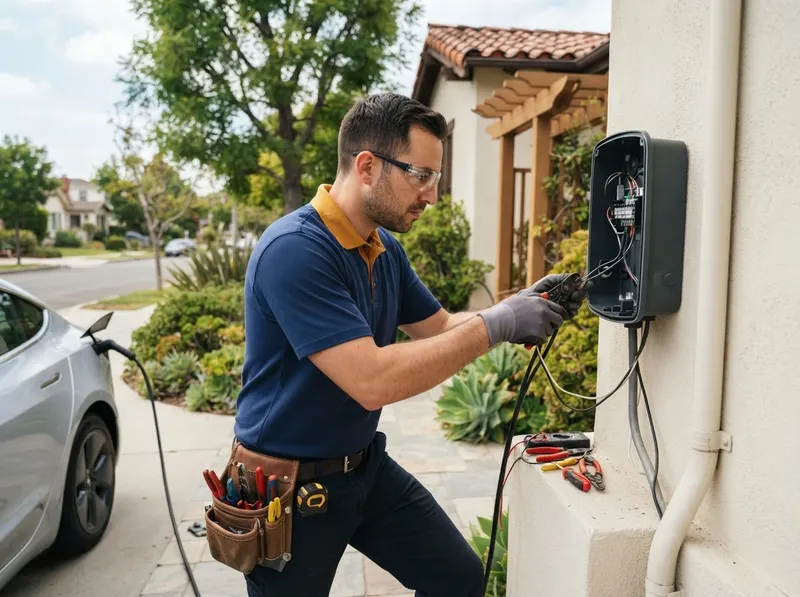
Dedicated 240-volt branch circuit wiring designed specifically for Level 2 electric vehicle supply equipment drawing up to 50 or 60 amps. Installations include hardwired wall units or heavy-duty industrial NEMA 14-50 receptacles, rigid metallic or EMT conduit runs from the primary distribution board, full panel load calculation verification under NEC Article 220, and electrical permit handling through municipal building desks. Technicians evaluate main service bus limits, balance phase loads across existing appliances, and mount weatherproof disconnect enclosures or outdoor-rated charging stations suited to withstand southern California sun and marine coastal air.
Get a quote →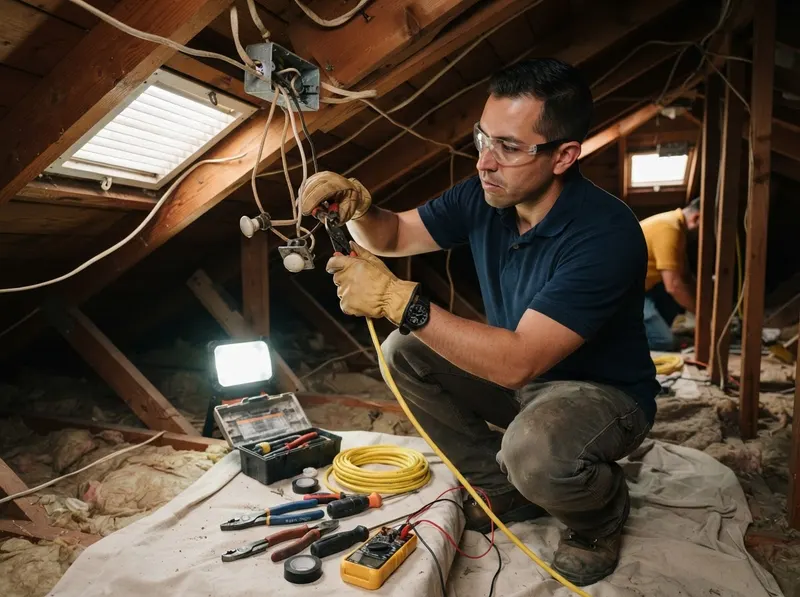
Systematic replacement or safety remediation of ungrounded early-20th-century cloth-covered and knob-and-tube conductors running through uninsulated attics, crawlspaces, and lath-and-plaster walls. Service eliminates brittle insulation fire risks, installs dedicated copper grounding paths, and implements dual-function AFCI/GFCI protection across older living quarters. Electricians map historical circuit pathways, eliminate dangerous ceiling-box splicing junctions hidden beneath blown-in insulation, and fish modern low-smoke non-metallic sheathed cables without destructive trenching across historic plaster molding and architectural finishes.
Get a quote →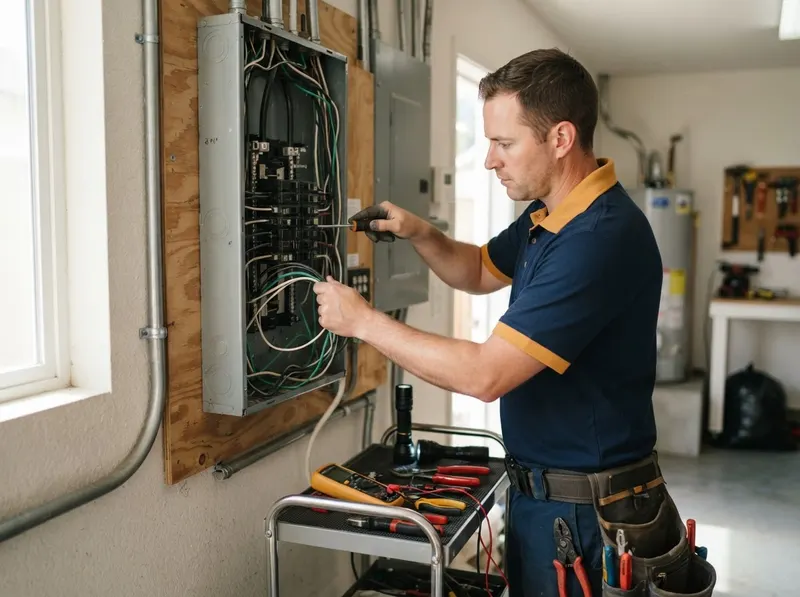
Adding 60-amp to 125-amp secondary distribution subpanels for detached accessory dwelling units (ADUs), garage workshops, home additions, and high-draw mechanical closets. Work balances phase loads across primary conductors, prevents main feeder over-utilization, and incorporates independent shutoffs adhering to Title 24 clearance standards. Technicians route heavy-gauge four-wire feeders with separate equipment grounding conductors and neutral bars, isolate the grounded neutral bus from the equipment enclosure, and test feeder voltage drop across long trench runs spanning residential lots.
Get a quote →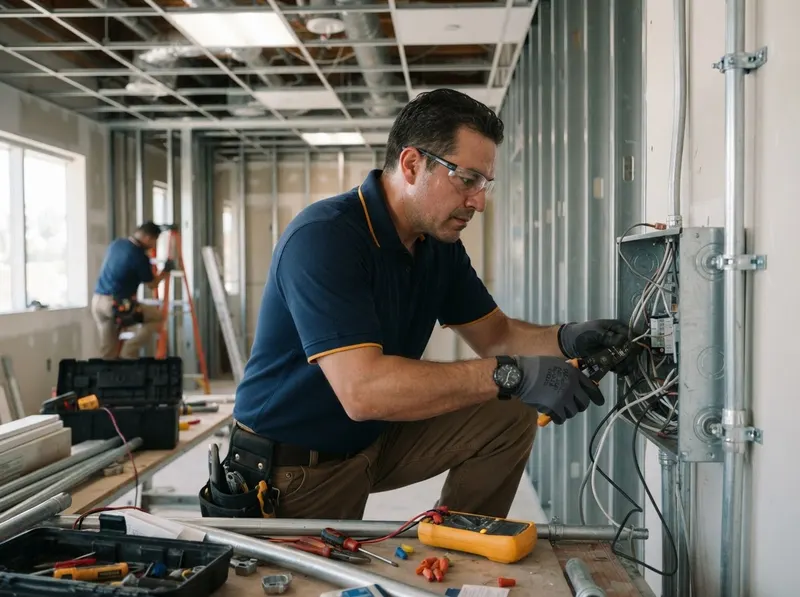
Three-phase distribution, dedicated commercial appliance hookups, emergency egress lighting, and conduit installation for retail spaces, offices, dining venues, and multi-family structures. Routine maintenance verifies phase-to-phase voltages, inspects commercial disconnect switches, checks motor starter contactors, and remedies municipal code compliance notices. Crews pull commercial-grade THHN wire through rigid metallic tubing, rebalance overloaded three-phase panels, install emergency battery backup luminaires to satisfy life-safety mandates, and manage commercial building permits under city inspection schedules.
Get a quote →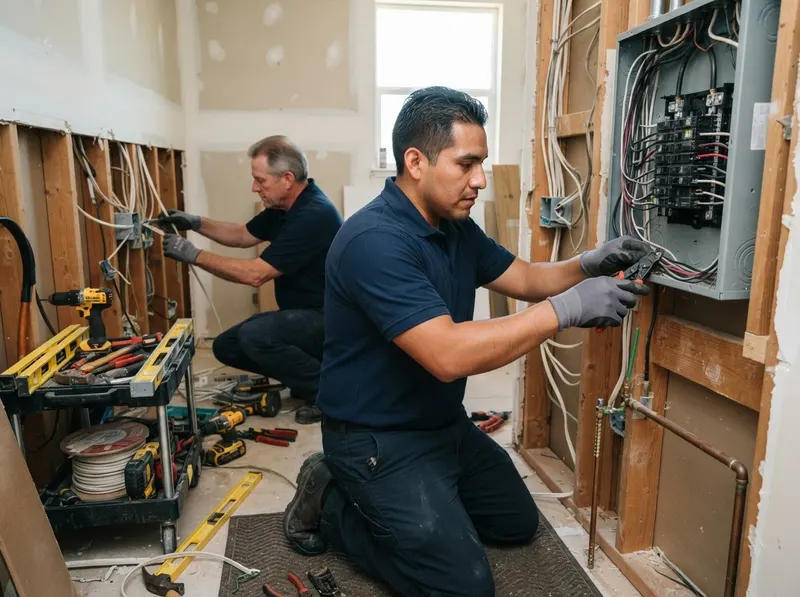
Complete replacement of legacy residential branch circuits using modern copper NM-B cable, intersystem bonding terminations, cold-water pipe bonding, and 8-foot driven ground rods. Work provides grounded three-prong outlets throughout the home, eradicates floating neutrals, and aligns older properties with active structural insurance standards. Electricians safely extract abandoned hazardous cabling, route dedicated circuits to high-draw appliances, configure arc-fault safety breakers on all living-area circuits, and provide comprehensive documentation required by insurers to underwrite vintage Los Angeles structures.
Get a quote →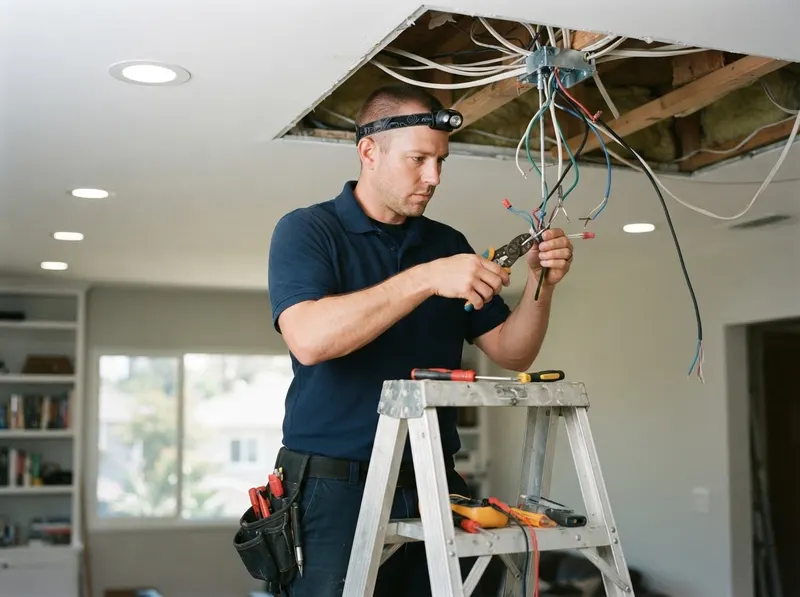
Recessed ceiling installations, architectural exterior fixtures, and dedicated driver replacements configured to meet California Title 24 Part 6 residential lighting efficiency mandates. Work integrates JA8-compliant LED systems, vacancy sensor switches, smart dimmer networks, and weatherproof outdoor conduit layouts. Crews calculate total luminous efficacy, balance lighting transformer loads, install damp-location luminaires beneath soffits, and ensure all dimming control units match driver frequencies to prevent high-frequency bulb flickering and premature solid-state failure.
Get a quote →You get a firm, itemized quote for your electrician before any work begins, no surprises, no pressure.
Careful prep, tidy work, and a full cleanup when we are done. We treat your home and belongings like our own.
The same trusted, background-checked team from the first call to the final check.
If a circuit breaker trips immediately upon reset, dispatch requires diagnostic fault testing rather than a breaker swap; replacing the mechanism without clearing the ground fault damages the bus bar. If a property retains a 100-amp main panel and intends to install central air conditioning, an induction range, or a dual Level 2 vehicle charger, schedule a full 200-amp service modernization; the trade-off is higher upfront capital and LADBS permitting time versus long-term prevention of main disconnect overheating. If branch wiring consists of ungrounded cloth-sheathed Romex or vintage knob-and-tube found throughout 1920s architecture, selective AFCI breaker retrofitting provides modern arc detection at the panel; however, whole-home rewiring remains the only permanent method to introduce equipment grounding conductors throughout living spaces.
If an accessory dwelling unit or detached garage workshop demands separate high-load branch circuits without exceeding primary service headroom, install a 60-amp to 100-amp secondary subpanel; the trade-off is running sub-feeder conduit across the property versus the cost of requesting an entirely independent utility meter drop from LADWP. When planning an electric vehicle charger, hardwiring an EVSE rated at 48 amps on a 60-amp breaker maximizes charging speed, whereas installing a 40-amp NEMA 14-50 receptacle provides plug-and-play flexibility; the trade-off is slightly slower charging throughput and the mandatory addition of an expensive GFCI breaker under recent National Electrical Code adoptions. For property owners evaluating local service providers, choosing a direct dispatch technician bypasses lead aggregator surcharges, while choosing large commercial outfits often incurs higher baseline minimums for small residential repairs.
Every project gets a firm, written price after a free on-site visit. Ranges below for orientation.
Tell us about your electrician job and we'll send a clear, written quote, usually the same day. Or just call and talk to a real los angeles pro.
(661) 545-6609
Los Angeles presents distinct regional electrical challenges driven by architectural diversity, local microclimates, and municipal utility jurisdictional boundaries. In hillside areas surrounding Elysian Park, Los Feliz, and Griffith Observatory, residential infrastructure frequently relies on 1920s ungrounded knob-and-tube circuitry enclosed within thick lath-and-plaster walls that require specialized, non-invasive wire pulling techniques to protect historical preservation aesthetics. Meanwhile, valley communities like Sherman Oaks experience sustained triple-digit summer heat that pushes vintage 100-amp Zinsco and push-matic service panels past safe operating temperatures, accelerating bus bar pitting and causing main breakers to trip under heavy air conditioning loads. Along coastal sectors such as Venice and Santa Monica, ocean-driven salt fog and marine moisture induce accelerated galvanic corrosion on exterior meter sockets, rigid steel conduit runs, and outdoor disconnect enclosures, demanding NEMA 3R weatherproofing or powder-coated aluminum panels to stop tracking faults. Furthermore, properties operating across Boyle Heights, Highland Park, Mid-City, and Leimert Park often deal with aging overhead service drop connections that fail modern clearance guidelines over garages, driveways, or accessory dwelling unit rooflines. Navigating these regional factors requires direct coordination with the Los Angeles Department of Building and Safety (LADBS) for strict municipal code plan reviews, combined with scheduled field releases from the Los Angeles Department of Water and Power (LADWP) or Southern California Edison (SCE) to safely isolate overhead drops and underground service laterals prior to service equipment energization.
Free estimates for los angeles & the surrounding area.
 Bright Electrician