A dedicated circuit runs isolated power straight from the main electrical distribution board to a single appliance, ensuring continuous draw cannot overload shared branch circuits. In older Los Angeles housing stock,…
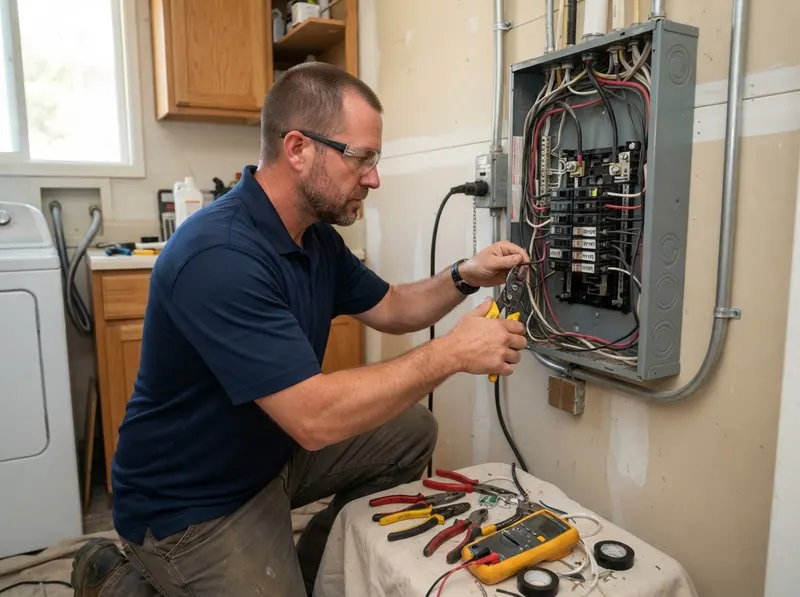
A dedicated circuit runs isolated power straight from the main electrical distribution board to a single appliance, ensuring continuous draw cannot overload shared branch circuits. In older Los Angeles housing stock, such as pre-1950 craftsman properties in Highland Park, mid-century homes in Sherman Oaks, or vintage multifamily buildings in Boyle Heights, kitchens and utility rooms often share one or two 15-amp lines across multiple high-draw devices. Modern appliances demand distinct power envelopes: an electric range requires a 50-amp, 240-volt dedicated feed, a built-in microwave pulls a continuous 20-amp, 120-volt load, and heat-pump water heaters demand a dedicated 30-amp circuit. Installing a dedicated line isolates these heavy draws, immediately preventing simultaneous-use breaker trips that halt household operations.
Executing dedicated circuit work under the Los Angeles Department of Building and Safety (LADBS) necessitates strict adherence to the current California Electrical Code (Title 24). In coastal environments like Venice, salt air accelerates terminal corrosion, making proper outdoor junction enclosures critical. In dense, hillside properties around Silver Lake and Los Feliz, running conduit through finished plaster ceilings or exterior crawl spaces requires specific derating calculations if conductors pass near uninsulated rooflines. When electrical panels lack remaining physical slots, the direct resolution involves tandem breakers or installing a subpanel; if total residential consumption exceeds panel capacity, service upgrades coordinating with the Los Angeles Department of Water and Power (LADWP) ensure clean, legal delivery.
Selecting an independent dedicated circuit over a shared branch tap balances labor impact against absolute system safety. Tapping into an existing 120-volt general circuit costs less upfront but repeatedly trips breakers when a refrigerator compressor cycles while a toaster runs, wearing down breaker springs and introducing arcing risks inside aged wall cavities. A dedicated run eliminates shared line fluctuation entirely, providing the steady voltage modern microprocessor-controlled appliances require. Physical installation follows a strict sequence: first, calculate appliance continuous load at 125 percent per National Electrical Code requirements; second, route continuous copper conductor (sized 12 AWG up to 6 AWG depending on amperage) through conduit or wall framing; third, install the appropriate single-pole or double-pole breaker; fourth, secure the matching receptacle; and fifth, conduct under-load voltage drop testing to verify clean power delivery before turning on the appliance.
Every job gets a firm, written price after a free on-site visit.
Tell us about your dedicated major appliance circuit installation job in los angeles and we'll send a clear, written quote, usually the same day.
 Bright Electrician